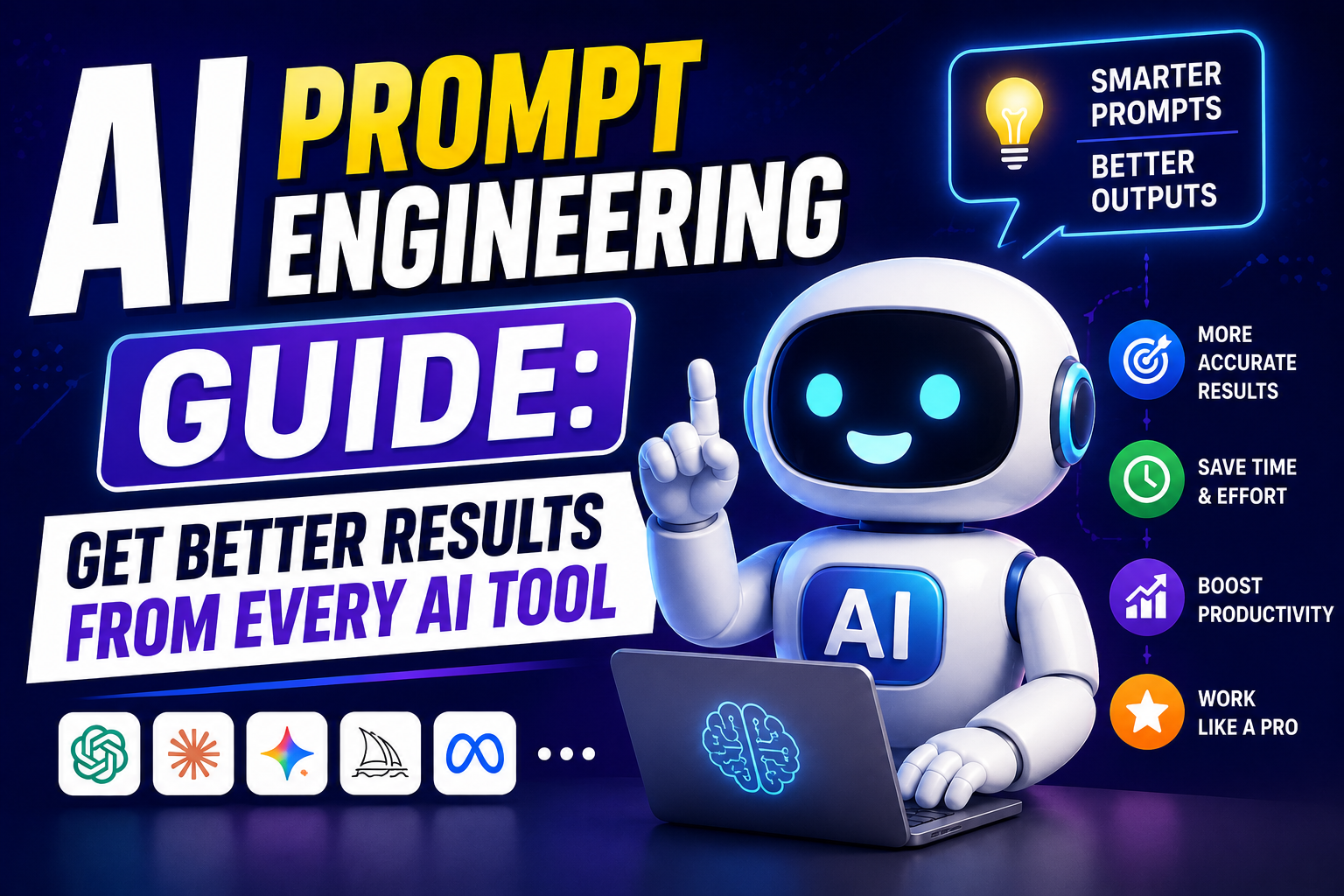
AI Prompt Engineering Guide: Get Better Results From Every AI Tool
A practical, business-friendly guide to writing AI prompts that actually work.
Prompt engineering is quickly becoming one of the most valuable skills for any team using AI tools — yet most people never learn it properly, and end up settling for vague, generic AI output. The difference between a mediocre AI response and a genuinely useful one usually isn't the AI model itself; it's how well the ai prompts behind it were written.
This guide breaks down what prompt engineering actually is, the real business benefits of getting it right, the mistakes most beginners make, and a step-by-step process you can start applying today — whether you're using ChatGPT, Claude, Gemini, or any other AI tool.
What Is Prompt Engineering?
At its core, prompt engineering is the practice of structuring instructions so an AI model understands exactly what you want, in what format, and with what context — instead of guessing. It's less about "tricking" the AI and more about communicating clearly, the same way a good brief gets better work from a freelancer than a vague one-line request.
Well-written ai prompts typically include four elements: context (background information), a clear task, the desired output format, and any constraints or tone requirements. Missing even one of these often leads to generic, off-target responses.
Key Benefits of Learning Prompt Engineering
Faster, More Accurate Output
Well-structured ai prompts cut down on back-and-forth revisions, getting you usable results in fewer attempts.
Consistent Brand Voice
Prompt engineering lets teams bake tone, style, and formatting rules directly into their prompts for consistent output.
Lower Cost Per Task
Fewer regenerations and edits mean less time spent per piece of content, email, or analysis produced with AI.
Scalable Across Teams
Documented prompt templates let entire teams produce consistent quality, not just the one person who's "good at AI."
Common Prompt Engineering Mistakes to Avoid
Most poor AI output comes down to a handful of repeatable mistakes in how ai prompts are written. Watch out for these:
Being too vague
"Write a blog post about marketing" gives the AI almost nothing to work with. Specify audience, angle, length, and goal.
Skipping context
The AI doesn't know your brand, audience, or prior conversation unless you tell it — assumptions lead to generic answers.
Not specifying format
If you need a table, bullet list, or specific word count, say so explicitly — the AI won't guess your preferred structure.
One-shot prompting
Treating the first response as final, instead of refining with follow-up prompts, leaves quality on the table.
Overloading a single prompt
Cramming five tasks into one prompt confuses the model — breaking tasks into steps usually performs better.
The Prompt Engineering Process We Use
Define the Goal
Clarify exactly what output you need and how it will be used before writing a single prompt.
Add Context & Constraints
Include audience, brand tone, and any rules the AI must follow.
Draft the Prompt
Write the task clearly, specifying format, length, and structure.
Test & Refine
Run the prompt, review the output, and adjust wording based on what's missing or off-target.
Save as a Template
Turn working prompts into reusable templates so the whole team benefits, not just one person.
Case Study: Prompt Engineering in a Support Workflow
Illustrative example based on a typical small business use case.
A growing e-commerce support team was using AI to draft customer replies, but responses were generic and needed heavy editing every time — costing more time than writing replies manually. After restructuring their ai prompts to include customer tone guidelines, order-context placeholders, and a fixed response format, output quality improved dramatically without changing the underlying AI tool.
Related Reading
Frequently Asked Questions
What is prompt engineering in simple terms?
It's the skill of writing clear, structured instructions so an AI tool produces the exact output you need, rather than a generic response.
Do I need coding skills for prompt engineering?
No. Prompt engineering is done in plain language — it's about clarity and structure, not code.
What makes a good AI prompt?
A good prompt includes context, a clear task, the desired format, and any tone or length constraints.
Can prompt engineering work with any AI tool?
Yes — the same core principles apply across ChatGPT, Claude, Gemini, and most other AI models, though exact behavior can vary slightly.
How long does it take to write a good prompt?
A well-structured prompt often takes just a few extra minutes to write, but saves significant time on edits and regenerations later.
What's the biggest mistake beginners make with AI prompts?
Being too vague. Most disappointing AI output comes from prompts that don't specify context, format, or the actual goal clearly enough.
Should I write one long prompt or several shorter ones?
For complex tasks, breaking work into smaller, sequential prompts usually produces better results than one overloaded prompt.
Can prompt engineering improve SEO content?
Yes — well-structured prompts help produce more accurate, on-brief content faster, which supports both SEO and GEO content strategies.
Is prompt engineering a long-term skill or a passing trend?
As AI tools become standard in business workflows, the ability to communicate clearly with them is expected to remain a practical, transferable skill.
How can a business train its team in prompt engineering?
Starting with documented prompt templates for common tasks, then refining them based on real output, is the fastest way to build team-wide capability.
Want Your Team Writing Better AI Prompts?
Talk to us about prompt engineering training and workflows built around your business.
Consult Our ExpertsAuthor: Gracewell